The Central App

News


CFO: 'One chance' to get rates overhaul right  

19 December 2025, 5:00 PM

Central Otago District Council (CODC) has launched a high stakes review of its rating system, with its chief financial officer warning councillors they have “one chance” to get it right.At the final council meeting of the year on Wednesday (December 17), councillors authorised staff to begin modelling different scenarios for how rates could be collected across the district. Chief financial officer Paul Morris told elected members the process carried significant risk if not handled carefully."You get one chance to do it and maintain credibility around it," Paul said. "It's got to be thought through and the decisions that come out of it will have to be well documented, making sure the affected parties are well informed about what we're proposing and why we’re proposing it." He cautioned against incremental changes without a clear plan, saying other councils had "tried this over a period of time” and made systems “progressively worse” with each attempt. Paul said the council would need to "cross your t’s and dot your i's" to ensure strict legislative compliance to "close down the opportunities for challenge", warning rates could be legally contested if they did not strictly follow the law. The review aims to address imbalances created by recent significant rate increases, the move to a district wide funding model and the pending transfer of water services. A report presented by Paul said the current rating system had not been reviewed for "many years" and it was time to "review and redesign, if appropriate". The report also signalled a possible reset for some sectors, saying the process would allow the council to propose new rates for industries “currently not covered adequately". Deputy mayor Tracy Paterson asked whether the council could go through the full review process and ultimately decide to change nothing. Paul said that outcome remained a possible. "We could end up back where we started, but at least we would have gone through a rigorous process to say ‘yes, we're happy with that’," he said.  "You don't know what's available and what you might like to do…it's a matter of going through that process and ascertaining whether you think that is equitable or not." Teviot Valley councillor Curtis Pannett said early engagement with the community would be important. Mayor Tamah Alley rejected suggestions to "pick away" at the issue, saying a comprehensive review was needed. She said any changes would likely be implemented in 2027, by which time the council would have "no three waters coming out" and a "strong indication from the government" regarding a potential rates cap. Funding for the review has already been allocated in council budgets.  Staff will now begin work on the proposal, with the aim to have it ready for public feedback by June.

Queenstown Airport hits holiday peak

19 December 2025, 4:45 PM

Travellers moving through Queenstown Airport are being urged to leave plenty of time, as the transport hub prepares for its single biggest day of Christmas arrivals.Today (Saturday December 20) marks the start of the heavy festive traffic, with more than 5,500 people expected to land in the southern hotspot in a single day.Approximately 150,000 passengers are scheduled to pass through the terminal between now and January 4, and nearly 93,000 of those will be travelling on domestic routes.Airport management confirmed these figures are on par with last summer’s busy season.Following today's influx of arrivals, the intensity is expected to remain high, with the weekends of December 27–28 and January 2–4 forecast to see more than 10,000 daily passengers.Head of operations, compliance and safety Juliet Breen said the team is prepared, but the infrastructure will be tested."We've also boosted staffing levels and added extra customer service support for the summer," Juliet said. "However, our systems will be operating near capacity, so please be patient and follow the guidance of our staff."To assist with the terminal atmosphere during the bottlenecks, the airport has scheduled live music and set up a pop-up Central Otago cherry caravan."Summer is always a special time in Queenstown. We love the excitement in the terminal as people fly in to spend Christmas with whānau or head off on adventures," Juliet said.Essential travel tipsParking is tight: Terminal car parks are hitting capacity. Drivers should use the Park & Ride service at Brookes Road or arrange a drop-off.The 20-minute rule: Do not leave cars unattended in the drop-off zone or you risk a fine. Use the P20 zone (right-hand lane at the roundabout) for 20 minutes of free parking for farewells.Watch your batteries: Power banks and batteries must go in carry-on luggage, not checked bags.Trans-Tasman travellers: If you are one of the 57,000 flying internationally, complete the NZ Traveller Declaration online before arriving to avoid delays.Drones: Recreational flyers should review Civil Aviation Authority rules before launching drones this summer to ensure airspace safety.

Six rescued after boat capsizes on Lake Dunstan

19 December 2025, 12:03 AM

Six people were rescued from Lake Dunstan on Thursday evening (December 18) after a boat capsized, prompting a rapid response from Coastguard Clyde volunteers.In a statement today (Friday), Coastguard said police alerted the organisation's national operations centre to the incident at approximately 7pm, requesting volunteers from the nearby Clyde branch respond to reports of a capsized vessel on the lake.Local volunteers launched rescue vessel Clyde Rescue II and made their way to the scene with ambulance personnel onboard.On arrival, the crew located all six people, who had made their way to a section of shoreline inaccessible by vehicle.Four people were transported by Coastguard safely back to shore, where three ambulances were waiting. Meanwhile, a nearby vessel assisted with bringing the remaining two people ashore.Clyde Rescue II skipper James Robinson said the crew responded quickly and worked well alongside other emergency services.“Our crew acted swiftly and worked well together alongside other agencies to assist those involved,” James said.“It’s a busy time of year for our volunteers, but the response was excellent and we were on scene quickly.”The Coastguard crew also recovered the capsized boat and brought it back to shore.While lifejackets were onboard the vessel, none of the occupants were wearing them at the time of the incident.“This could have ended very differently,” James said. “Lifejackets save lives and wearing them is the single most important thing you can do.”Coastguard Clyde volunteers and ambulance personnel responded after a boat capsized on Lake Dunstan on Thursday evening, with six people rescued from the water. Images: SuppliedWith summer bringing increased activity on local waterways, Coastguard is reminding boaties to wear a lifejacket at all times, carry at least two reliable waterproof ways to call for help, check the weather before heading out, avoid alcohol, and ensure boats are loaded within safe limits.

Council to fell Centrepoint trees

18 December 2025, 5:00 PM

Central Otago District Council has approved the removal of three mature trees from Alexandra’s Centrepoint car park without public consultation, resolving a decade long dispute with local business owners. At the final council meeting of the year on Wednesday (December 17), councillors endorsed a Vincent Community Board recommendation to fell two claret ash trees and one liquidambar tree before autumn. Vincent Community Board Chair Jayden Cromb defended the decision to bypass public consultation on the topic, arguing the damage caused by the 30-year-old trees meant there was no realistic alternative.Speaking during the community board chairs’ slot at the start of the meeting, Jayden asked the council to be pragmatic about when it engaged with the public. "We should consult when there is a meaningful choice, but just get on with the job when there's not," he said. Russell Ibbotson, a director of Limerick Properties Limited (LPL), which requested the removal, spoke during the public forum in support of the proposal. The decision was complicated by the site's unusual tenure, which includes a mix of public land and property owned by LPL. Deputy mayor and Vincent councillor Tracy Paterson said she was uncomfortable with elements of the proposal, warning that it could set a precedent around council liability.  She was concerned the council could face similar claims elsewhere if private property damage caused by council trees was not carefully managed. To address this risk, councillors passed an additional motion directing the chief executive to investigate the ownership of the car park spaces and formalise a maintenance agreement for the site. Mayor Tamah Alley described the tenure arrangement as an "incredibly complex thing” and noted the loss of amenity that would result from the felling. "We know that in Alexandra, in Central Otago, a car park under a tree is one of the most coveted car parks in town in the summer," she said. Despite the shade value, she said the issue had been "floating around for 10 years", costing the council “time and money”. "There is a recommendation in front of us today that will deal with it once and for all,” she said. “I think possibly we need to rule a line under it and move forward.”A report from parks and recreation manager Gordon Bailey detailed complaints from LPL about leaf litter causing drainage issues and tree roots creating trip hazards. Vincent councillor Martin McPherson supported the removal, citing the physical debris caused by the trees during high winds. "The day we first discussed this as a community board we had some extremely strong nor'westers come through and there were bits of those trees throughout that car park," he said. The removals are estimated to cost $10,000, with $20,000 already budgeted for the work. Under the council’s tree policy, the removals will require replacement planting, which will be addressed through a new landscaping plan.

Central Otago to bankroll $8.8M Southern Waters setup

18 December 2025, 5:00 PM

Central Otago District Council (CODC) has agreed to act as the banker for the new regional water entity, fronting an estimated $8.8M in setup costs to get the organisation off the ground.At the final council meeting of the year on Wednesday (December 17), councillors authorised chief executive Peter Kelly to sign a legal agreement that designates Central Otago as the "lead council" for the Southern Waters partnership.Under the deal, CODC will borrow the money needed to establish the new council controlled organisation (CCO), which will eventually manage water services for Central Otago, Clutha, and Gore.A report tabled by the chief executive revealed the cost of setting up the entity is estimated at $8.8M, with the biggest ticket item a new information and communications technology system at $4.2M followed by a "transition team” at $1.5M.The decision for Central Otago to carry the initial debt was driven by financial pragmatism."Central Otago District Council’s ability to access competitive borrowing terms", was a key reason listed in the chief executive’s report, alongside a desire "to simplify the transaction costs" rather than having three councils paying separate bills.While Central Otago is providing the cash upfront, the ‘Deed of Amendment and Cost Sharing’ ensures ratepayers are not permanently subsidising their neighbours.The legal document, prepared by law firm Wynn Williams, states the three councils "agree to fund the costs of the project in equal parts".To protect Central Otago, Clutha and Gore are legally bound to pay interest on their share of the debt. The deed said this interest would cover the "actual interest rate" paid by the council, plus "all margins, fees, costs, and charges incurred by CODC".The chief executive’s report said the goal is for Central Otago to "fund all project expenses...and recover the costs back from Southern Waters once it is established".During the discussion, Vincent councillor Nathan McLean asked the chief executive for reassurance CODC would not be “left carrying the can” if the new water entity fails to be established for whatever reason.In response, Peter said, “this agreement is what guarantees that”.The agreement includes safety nets for CODC if the proposal falls apart before the new company is formed.The deed lists specific "repayment events" that would force Clutha and Gore to "immediately...repay its Pro-rata Share" of the costs to Central Otago.These triggers include if the new entity has not been incorporated "by 31 December 2026", or if the project is scrapped for "any other reason, including a change in Government policy".The chief executive’s report provided a breakdown of the estimated establishment costs, prepared by consultants Morrison Low:ICT system: $4,200,000Transition team: $1,500,000Entity establishment: $640,000Office set up: $475,000Legal and compliance: $400,000Finance and funding workstream: $400,000Communication and engagement: $400,000Business process and design: $400,000Restructuring costs: $250,000Rebrand: $150,000However at the meeting Peter described these costs as “broad” and “indicative”.“Will it cost that much? I’m not sure,” he told elected members.At the meeting councillors also agreed to give mayor Tamah Alley delegation to, along with her mayoral colleagues at Clutha and Gore, appoint the chair of the new entity.Peter said a recrutiment process was now in its final stages and had attracted a number of strong candidates.

Temporary Bailey bridge opens in Alexandra as repairs delayed

18 December 2025, 4:56 PM

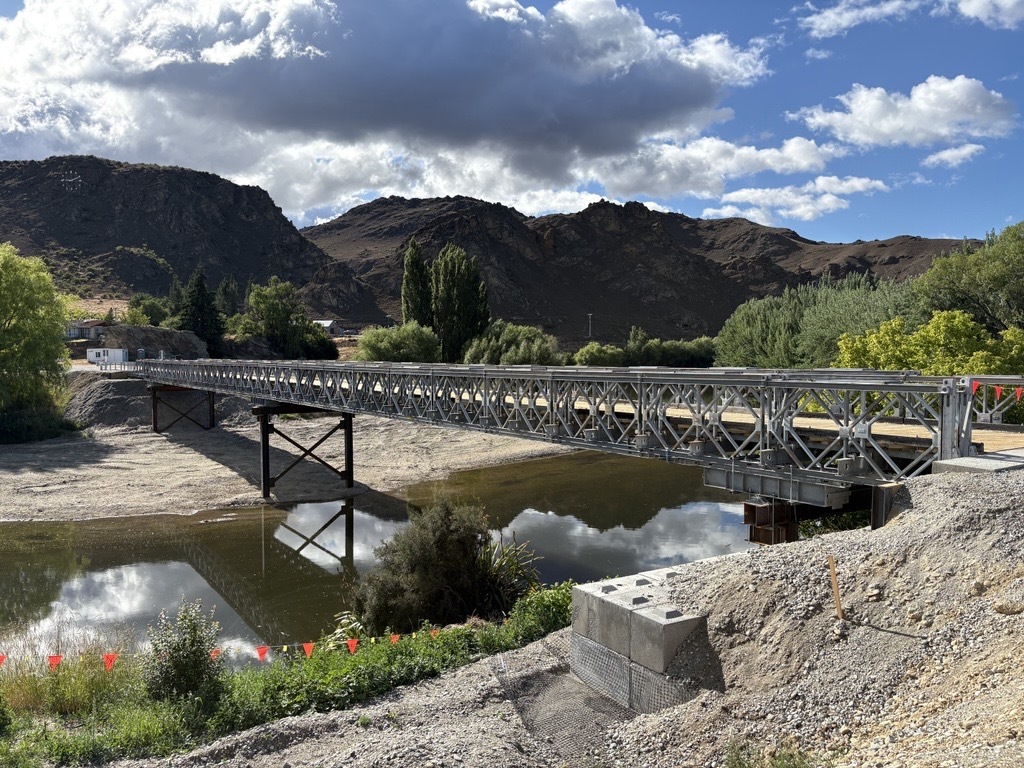
A new temporary Bailey bridge across the Manuherekia River opened to the public on Thursday (December 18), providing a vital transport link while the refurbishment of the Little Valley Road bridge faces delays.The bridge, located at the Linger and Die reserve, connects Rivers Street and Graveyard Gully Road, offering a crossing for trucks that cannot currently use the Little Valley Road bridge due to weight restrictions.While the temporary crossing is now operational, Central Otago District Council confirmed the main refurbishment of the Little Valley Road bridge has been pushed back.A council spokesperson said the delay was caused by external supply chain factors."Our contractor is currently experiencing delays in the supply of hardwood timber due to geo-political issues affecting the supply chain," the spokesperson said."As a result, the project is now expected to commence in early March 2026."Despite the late start, the council said the contractor is working “to optimise the construction programme”, with the project still targeted for completion by mid-2026.Until construction begins in March, the Little Valley Road bridge will remain open to suitable heavy and light vehicles, pedestrians, and cyclists. Once work commences, a temporary accessway will be installed on the bridge for pedestrians and cyclists, and the Shaky Bridge footbridge will remain an option.The temporary bridge across the Manuherekia River is not for pedestrians, CODC says. Image: Facebook/CODCHowever, the council said the new Bailey bridge is strictly for vehicles only."The Bailey bridge is suitable for vehicles, including Class 1 heavy vehicles, but has no facility for pedestrian access," the spokesperson said.Motorists in the area are advised to drive with caution as give way priorities have changed at the intersections of Graveyard Gully Road and Walton and Thompson Streets, and speed restrictions are in place.Parking on Walton and Thompson streets adjacent to the Linger and Die Reserve will also be limited for safety reasons until the project is completed.

Council approves Roxburgh site investigation after push to stay put

17 December 2025, 5:15 PM

Central Otago District Council has voted to investigate moving the Roxburgh Entertainment Centre, despite early community feedback favouring a rebuild on its long standing Scotland Street location.At the final council meeting of the year on Wednesday (December 17), councillors approved a recommendation for the project steering group to investigate both the existing site and one or two alternative locations. A report will be presented to the Teviot Valley Community Board and council in March, when a final decision on the site is expected. The decision follows a heated public meeting in Roxburgh last week, where a strong majority of residents showed a preference for the status quo. However, the results of a community poll, tabled at Wednesday’s meeting, suggested a growing number of residents - close to half - were now open to considering additional sites. Council staff said voting took place at the public meeting and continued online and in person in the days that followed. Mayor Tamah Alley said she had received "substantial" feedback directly from the community, estimating approximately two-thirds of which supported retaining the Scotland Street location. "We have a site that is ready to go. It is ready to go now and start building, and it is a site that has been suitable for that community and loved and cherished by that community for 100 years," Tamah said. Despite that, she supported the motion, saying it allowed council to explore other options without ruling out a rebuild on the original footprint. "I look at the recommendations, and they allow that to happen. They allow the investigation of other sites but also enable us to rebuild on the same site," she said. The investigation will include geotechnical assessments, demolition reports, and property valuations for potential alternative sites.  The former Roxburgh Entertainment Centre, destroyed by fire at the start of 2025. Image: FileA report from property officer Tara Bates estimated the work would cost between $20,000 and $40,000, funded from the project’s $4M insurance payout. Teviot Valley councillor Curtis Pannett acknowledged tensions in the community ahead of last week’s meeting. “The rumour mill was in full overdrive,” Curtis said."People truly did believe that the decision we were making...was to shift it.”Addressing Teviot Valley residents watching the council meeting online, Curtis said the investigation was about long term planning rather than forcing a move on the community."What is the best building we can build for this community for the next 50 to 100 years, and then from there, is the current site the best spot for that? That's how it should be looked at," Curtis said. He stressed there was no predetermined outcome. "We don't have a favourite site, and I acknowledge the history that's tied to the current site," Curtis said. Vincent councillor Martin McPherson described the investigation as necessary due diligence and an opportunity to "look further afield" to futureproof the town centre. He said the public meeting had provided an opportunity for council to apologise for previous communication gaps and recognise the strong emotional attachment residents have to the hall at its original spot."The overwhelming feeling coming from the public meeting was to retain it," Martin said. While staff indicated the investigation would delay the project by at least five months, Martin said the certainty gained would outweigh the wait.He said the investigation budget would not be “money badly spent”.To illustrate the balance between public sentiment and long term planning, Martin referenced the Eiffel Tower. "At the time it was quite controversial and ratepayers in Paris were screaming bloody murder,” he said.“Now it is the most loved and most visited icon in the whole of Europe.”Have a story to share or comment to make? Contact [email protected] 

Economic climate right for Alexandra subdivision

17 December 2025, 5:00 PM

Canepa Developments has completed the first stage of its Ngapara Estate subdivision in Alexandra, and sections will go on the market early in the New Year.The new 52-lot subdivision is located under the Boot Hill recreational reserve, and included in the development is a walkway linking through to the mountainbike tracks behind it.Canepa Developments has been involved with subdivisions for the past 30 years, including Old Golf Course at the top of Bridge Hill, the Tiger Hill rural subdivision, and another one in Glenorchy.Led by local businessmen Jeff Vessey and Phil Dunstan, all of the drainage work, services, curb and channeling and footpaths have been completed, but they said it was looking likely the road sealing might not be finished until early February.Jeff said once signed off by council, the titles will become available and sections actively marketed, but already four to five have been “tentatively” sold.He said now was the right time for the Alexandra subdivision, but it had taken awhile to come up with a development plan.“We were waiting for the right economic climate and there is a bit of luck involved. But we are also building it now because we believe in the future of the town,” he said.Sections range from the several smaller 300sqm lots up to 790sqm and Jennian Homes is also building a showhome onsite.Jeff said the smaller sections might appeal to retirees wanting to downsize to a smaller two-bedroom home, or to first home owners looking for an affordable option.“Gone are the days of people wanting a quarter acre section,” he said.But for those who are still looking for a lifestyle block, the recently consented Glenoir LP subdivision along Dunstan Road offered sections from 900sqm to 1880sqm.And further north along Dunstan Road, Molyneux Lifestyle Village has started on its 16ha development on the old William Hill winery site - offering 2000sqm to 3000sqm sections.Have a story to share or comment to make? Contact [email protected] 

No obligation free sausages in Pioneer Park

17 December 2025, 5:00 PM

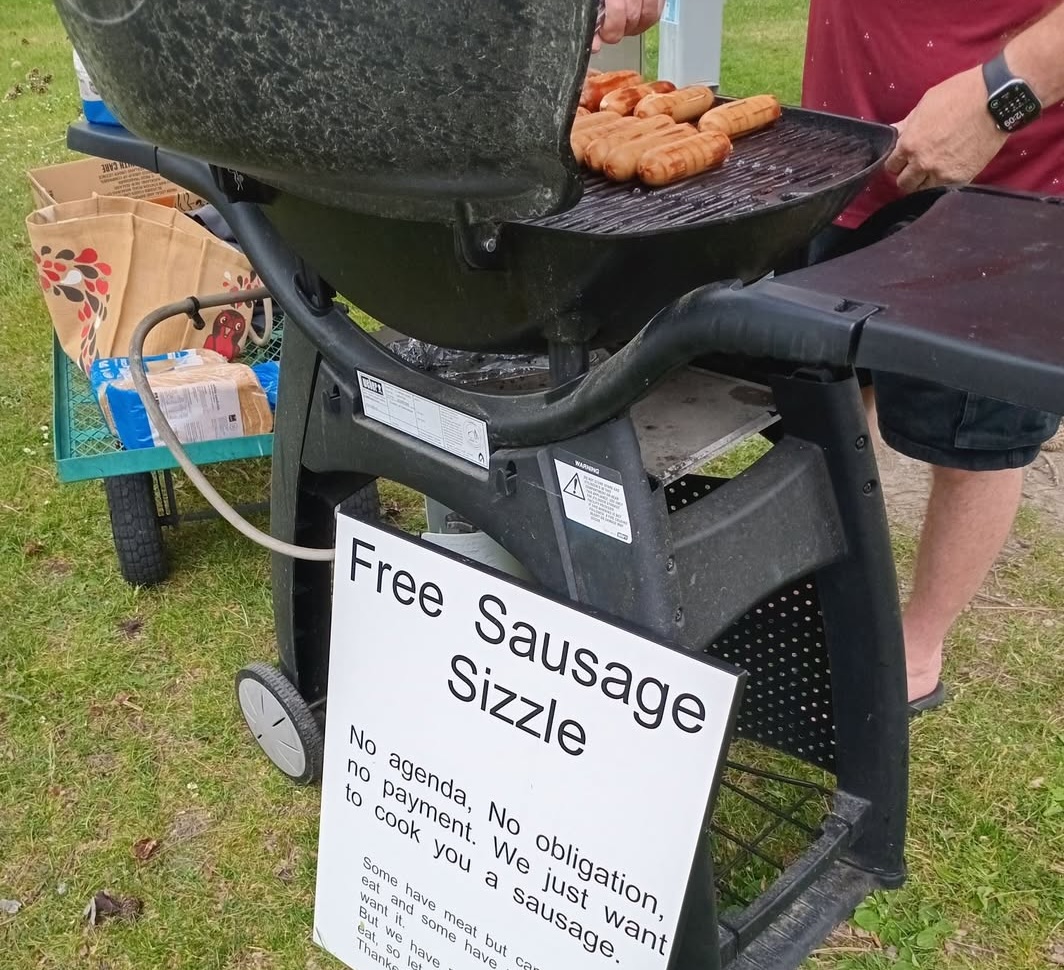
A group of Central Otago lads have been cooking up free sausages in Pioneer Park every Sunday since mid-November.Why? Just because. “It just scratches an itch that I have,” one of the volunteers explained.They don’t want to be named or have their photo in the media - “it’s not about us,” they said, but if you turn up on Sunday at midday you can see for yourself.Every week they purchase 45-60 sausages and bread from the supermarket, to give out to people, “and once they’re gone they’re gone.”Last week they really turned up the heat and went gourmet, after receiving a donation of venison sausages.This Sunday will be the last one for a while, but if you’ve missed out then keep an eye out on social media for when they crank up their barbecue again in mid-January.They cater for both locals and visitors that are passing through - one week there was a group of guys returning from a stag do in Queenstown, that were “a bit dusty," and who needed a good feed.A few families have come back every week, and the lads know their sausages have been “helpful,” to them. This is what it’s all about.“Some people ask, is it a church thing? Some try and pay but it changes it,” they said.“Sometimes it's nice to get something free to eat, and sometimes it's needed. Either way, if you want to pop down for a sausage and bread this Sunday, you're very welcome.”There might even be some extra Christmas treats with the sausages this weekend, so don’t miss out.Have a story to share or comment to make? Contact [email protected] 

Managing your small business cash flow through summer (sponsored)

17 December 2025, 3:35 PM

If summer is not your best trading time, then planning your cash flow is especially important for you. Remember – profit IS NOT the same as cash flow!One of the most important lessons business owners have to learn, often painfully, is that having enough cash flowing through your business regularly is critical.Basically, it doesn’t matter how much money is coming in the future if you don’t have enough money to get through day-to-day now:Employees need their wages on time, regardless of when customers pay.Your landlord doesn’t care that you’re talking to investors and will have the money in a couple of months.Suppliers may not be willing to extend credit, restricting your ability to buy materials or products for your customers.More businesses fail for lack of cash flow than for lack of profit.Why is this? There are two main reasons:Business owners are often unrealistic in predicting their cash flow. They can overestimate income and underestimate expenses.Business owners fail to anticipate a cash shortage and run out of money, forcing them to suspend or cease operations, even though they have active customers.For example, many retailers incur large outflows of cash prior to the Christmas season in order to build inventory. This cash outflow does not constitute a loss. However, a business owner must anticipate and plan to have enough cash on hand to pay vendors or make other finance arrangements in advance. Likewise, companies who experience a drop in business over the Christmas period (e.g. shut down or have seasonality lows) need cash reserves to cover reduced income, to ensure staff receive holiday pay, and the business is able to meet obligations to pay provisional tax and GST (due on 15th January 2026). These points especially apply to service based businesses. So what’s the difference between profitability and cash flow?Profit is the difference between income and expenses. Income is calculated at the time the sale is made, rather than when full payment is received. Likewise, expenses are calculated at the time of purchase, rather than when you pay the bill.Cash flow is the difference between incoming versus outgoing cash. So debtor receipts can make a significant difference, to cover expenses which are needed regardless.Cash flow can also include injections of working capital from investors or debt financing. Balance sheet outflows include GST, tax, inventory purchased, new assets etc. These don’t impact profit but do impact cash.Your accountant can help you improve your upcoming cash positionPreparing accurate cash flow projections on a regular basis is one of the most important things a small business can do – alerting you to potential problems before they arise, and enabling a pro-active not a reactive discussion with your bank when extra funds are needed; a pro-active discussion signals good planning and is much more likely to be met with a favourable response.  All business owners could benefit from cash flow planning. The more you work with your numbers the better you will become in managing your cash flow.Be prepared, and take the cash flow stress out of this summer!  Love to Grow can work with you to model your cash flows, profit and balance sheet for the short term or the next 1-3 years so you can improve your cash, peace of mind and business confidence. Sing out if you would like us to help.Sponsored Content: This article has been submitted by a contributing local expert as part of The Central App’s sponsored advisor programme.


Choosing the right real estate agent in Central Otago – big brand or boutique? (sponsored)

17 December 2025, 3:21 PM

When it comes to selling your home in Central Otago, choosing the right real estate agent can feel like one of the biggest decisions in the process. With so much at stake financially, emotionally, and logistically, sellers often ask a key question: “Should I list with a large multinational real estate company, or work with a smaller boutique or one-person agency?”It’s a fair question, and one many homeowners consider well before they go to market. A lot of the worry comes down to one thing: who can actually get your property in front of the most serious buyers?Here’s a clear, local take.The reality of marketing reach todayNot long ago, big-name brands held a real advantage. They had the prime newspaper spots, the big window displays, and the community recognition that drew early attention.But things have changed.Most buyers now begin their search online — not by walking into an office and not by following a specific brand. The major platforms dominate the New Zealand property market:Trade Me Propertyrealestate.co.nzOneRoofSocial media marketing on Facebook, Instagram, and TikTokGoogle searches for properties in local towns and price rangesWhether you choose a large franchise or a boutique agency, they’re all using the same key online channels. That means reach comes less from the brand logo and more from how your individual campaign is built.Strong marketing today relies on:a high-quality marketing packagestrong property presentationtargeted digital advertisingan agent who actively follows up and engages with every enquiryWhat independents offer vs bigger companiesIndependent or owner-operated agencies can bring some genuine advantages:lower overheads can mean more flexible commission optionspersonalised service directly from the business ownerquick decision making and tailored marketingmore focused attention on your listingPlenty of top-performing agents across New Zealand operate independently. Success usually comes down to experience and strategy rather than scale.So which is best for you?Instead of comparing the size of the company, try asking these practical questions:How strong is the agent’s recent performance in my area?What marketing package do they recommend, and what’s the reasoning?How well do they communicate and negotiate?Can they clearly explain where potential buyers for my home are likely to come from?At the end of the day, sellers choose people — not brands. The right agent should give you confidence, communicate honestly, and shape a marketing plan that reaches the right buyers across Central Otago and beyond.A final wordWhether you go with a global franchise or a small boutique, the most important factor is the same: choose the agent who shows real skill, clear strategy, and genuine commitment to securing the best possible result. Marketing reach isn’t determined by the size of the company, but by the expertise behind your campaign.Sponsored Content: This article has been submitted by a contributing local expert as part of The Central App’s sponsored advisor programme.

Lowburn subdivision attracts mix of submissions

16 December 2025, 5:00 PM

Support is divided for the Lakeside Christian Centre’s proposed subdivision in Lowburn.Parishioners have been working hard to complete their new church fitout, and are hoping to subdivide two 3000sqm lots of land to help secure more funding.Situated in Lowburn Valley Road, the project has been years in the planning, all paid for by the 120 members themselves, through fundraising, donations and a business loan.Led by Pastor Bruce Wast, Stage 2 will get underway for the 600sqm church in 2026.The new church has plenty of traditional features, such as a higher pitch roof similar to the existing one, and complete with a vestibule, knave and altar.The Central Otago District Council received six submissions for the subdivision, and land use consent is also sought to establish a residential building platform on the two sites.While the proposal is considered a non-complying activity under the District Plan for a subdivision in the Rural Resource Area, council’s planner noted that the site sits within a clearly defined enclave of residential activities in the community.Four residents have opposed the subdivision, citing inconsistencies with the District Plan, environmental risks on the nearby stream, as well as flood hazard risks, and concerns the development will set a precedent for high density housing.Dr Len Wakefield said in his submission that there had been a previous attempt to rezone the land to Large Lot Residential Precinct 2 but it was unsuccessful.“It is inevitable that there will be further subdivision and development along the Lowburn Valley Road. It is my view that any new development should comply fully with the regulations governing rural resource areas. The current application does not comply with separation distances or internal setbacks.”Two submitters supported the application, including John and Steph Wennekes, but they are concerned there are no caveats or constraints on the proposed sections.They want to see conditions that disallowed relocatables and accommodation blocks being built.A hearing will be held on the proposed development in the New Year, once a date is confirmed.Have a story to share or comment to make? Contact [email protected] 

Cromwell College makes national debut at adventure racing champs

16 December 2025, 4:45 PM

A group of Cromwell College pupils has returned from the central North Island after competing at a national adventure racing competition for the first time in the school’s history. The eight-strong team of Year 9 and 10 students travelled from Central Otago to Tongariro National Park to take part in the five-day Get2Go National Challenge, joining 11 other teams from across the country.The Cromwell team qualified after placing second at a regional event in Queenstown, earning a late call-up to nationals.Pupil Tom Meyer said the experience pushed competitors well beyond their comfort zones.“It’s about learning your deficiencies as an individual and then also as a team, and then figuring out how you can overcome those to benefit everyone,” he said.“The challenges were extremely varied, and you had to work out how to support your team.”Events included kayaking, mountain biking, running, high ropes, raft building, a multisport adventure race and a six-hour rogaine on Mt Ruapehu, with competitors facing mud, hail and thunderstorms.For teammate Meelah Maddox, the week was as much about personal growth as competition.“I learned that I can push myself more than I think,” she said.“As a team, we learned that communication is really important, and that you can only go as fast as the slowest person.”Tom Meyer, Xavier Hore, Max Scheibmair, Jessi Cook, Brittany Price, Meelah Maddox, Eva Settle, and Cara Naylor represented Cromwell College at the Year 9 and 10 Get2Go Challenge, held in the North Island in early December. Images: SuppliedDespite being first-time entrants, the Cromwell College team placed third overall for teamwork.Teacher Kim Cook, who supported the team at the event, said that result was a highlight.“They constantly supported each other through all the ups and downs, stayed positive and worked together - a fantastic group of young people,” she said.“I loved seeing them push themselves to do things outside of their comfort zone.”Kim confirmed it was the first time Cromwell College had competed at both regional and national levels, and said the experience had sparked strong interest in making adventure racing a regular fixture at the school.Have a story to share or comment to make? Contact [email protected] 

School kids bring local legends to life

16 December 2025, 4:45 PM

Children at Goldfields School in Cromwell have brought local pūrākau to life, unveiling a series of interactive storyboards created and written by students as part of a learning project focused on place and history.Whānau were invited to the school on Monday (December 15) to explore the new installations, which are dotted throughout the grounds and retell Māori legends linked to well known Cromwell landmarks.The storyboards encourage readers to walk as they read, with words and illustrations created by pupils from the school’s middle classrooms.Head teacher Nic Hale said the idea came from the children themselves while learning about “our place”, inspired by a similar concept they had seen along one of Cromwell’s greenways.“They drove it,” Nic said.“They completely took us down this road. It wasn’t even on our radar.”Students organised themselves into working groups, including writers, illustrators, graphic designers and builders.“There was 100 per cent engagement,” Nic said.“Every child had a part to play, and every child executed their part.”Year four pupil Wyatt Sutherland worked as part of the building crew, helping plan and construct the storyboard stands.“We had to figure out the cost of the materials,” he said.“It was quite hard.”Rosa Lipscombe reads ‘Maia the Brave’. Image: The Central AppParents donated tools and time to help dig holes and cement in poles, which now hold the story pages inside weatherproof display boxes around the school.Fellow year four pupil Rosa Lipscombe had the chance to read all four completed stories last week and said she was impressed.“I was like, ‘oh wow, these stories are amazing’ - the detail we put into them,” she said.Rosa was part of the writing team that retold the story of Maia the Brave, who travelled through Bannockburn long ago in search of moa eggs.“We brainstormed ideas and came up with a plan,” she said.“I felt proud of myself and my team.”Other stories retold by the Goldfields School children include Te Waka Huruhurumanu, which journeys from Mōeraki before crashing into the Pisa Range, the tale of the giant Kopuwai near the Clutha/Mata-Au River, and the story of the mist maiden linked to the mountains above Lowburn and Pisa.Have a story to share or comment to make? Contact [email protected] 

Clyde School’s Christmas elf antics

15 December 2025, 5:00 PM

Clyde Primary School teacher Sydney Robertson has a Christmas elf whose behaviour has got a bit out of control leading up to Christmas.Deirdre has been playing pranks on the students since the start of December, firstly ruining all of the Year 6 and 7 art work, and then giving the teacher a crazy hairdo.But the final straw was last Friday when she stole the keys to Sydney’s car and crashed into a pole right outside school.“She’s a bit of a menace,” Sydney said.The antics started on December 1 when the class was making candy cane art and Deirdre came along and drew all over it.“And then I thought I would get a bit more drastic. A bit more out the gate,” Sydney said.She hunted all over social media for ideas, but felt many of them were a bit lame. She wanted to create more of a ‘wow’ factor, so one day turned up at school with an interesting haircut.Sydney Robertson showing off her new hairdo thanks to Deirdre the elf. Photo supplied“I told them Deirdre wanted to open a salon so she gave me a haircut and some bangs.”She said the Clyde School staff were more pranked by it than the students.Then last Friday things really started to ramp up for the last full day of the year.Sydney got to school early and made it look like she had crashed her car into a pole. She sat Deirdre on the dashboard with a note - “whoops wasn’t me. I’m outta here.”The principal arrived at school and instantly fell for the joke, asking Sydney if she was alright.“But I said, ‘it wasn’t me it was Deirdre.’”The Clyde School principal and this Central App reporter both fell for the prank. Photo suppliedSydney made it even more convincing by adding ‘caution’ tape which she found in a drawer in her classroom, and put a ‘no elf parking’ sign and ‘elves rule’ sign in the back window.“I just wanted to set up a deck chair outside and watch all of the reactions.”She said people were coming to the school all day to take photos, once word got around about Deirdre’s crazy antics.Sydney said her elf has been around for awhile, but this year her behaviour was increasingly naughty, and finally they’ve managed to put a stop to it.“She’s in elf jail now.”

Patearoa boil water notice lifted as treatment upgrades go live

15 December 2025, 4:58 PM

Patearoa residents can drink from the tap again after Central Otago District Council (CODC) lifted a long-running boil water notice for the township yesterday (Monday December 15).The advisory, which had been in place as a precaution due to the lack of a protozoa barrier in the local supply, was removed following the successful commissioning of new treatment infrastructure.The lifting of the notice comes just weeks before a national regulatory deadline requiring surface water supplies to meet stricter standards by the end of December.CODC has advised residents to flush their systems to remove old water from pipes.Since early November council contractors have been onsite at the Aitkin Road treatment plant, installing new cartridge and ultraviolet (UV) filtration systems designed to remove the risk or protozoa contamination.CODC water services operations manager Andrew Watson said testing confirmed the new systems were performing as intended.“These upgrades provide a long-term level of protection for the Patearoa water supply,” Andrew said.“We appreciate the community’s ongoing support as we continue working to provide safe, reliable drinking water across our district.”The Patearoa project is part of a wider $4.2 million investment allocated across the council’s 2024 Annual Plan and 2025 Long Term Plan that covers upgrades for both Patearoa and Ranfurly, where similar water quality challenges exist.The decision to retrofit the existing plants was a fiscal one; Council earlier indicated building entirely new treatment facilities would have cost ratepayers significantly more - approximately $15M for Patearoa and $21M for Ranfurly.The upgrades were required in response to new quality assurance requirements for drinking water suppliers, which came into effect at the end of 2022.While the new technology significantly reduces the likelihood of future advisories, severe weather events or extremely high turbidity could still trigger occasional precautionary notices in the future.In September 2023, Queenstown experienced a cryptosporidium outbreak linked to its drinking water supply, which lacked a required protozoa barrier. CODC’s how-to guide for water users:Taps: Run all cold water taps for at least five minutesAppliances: Clean and flush coffee machines, ice makers, and water dispensersTanks: Ensure a full turnover of water in any header tanksFilters: Check and clean or replace household filters

 SuperGrans building stronger community connections
SuperGrans building stronger community connections

15 December 2025, 4:30 PM

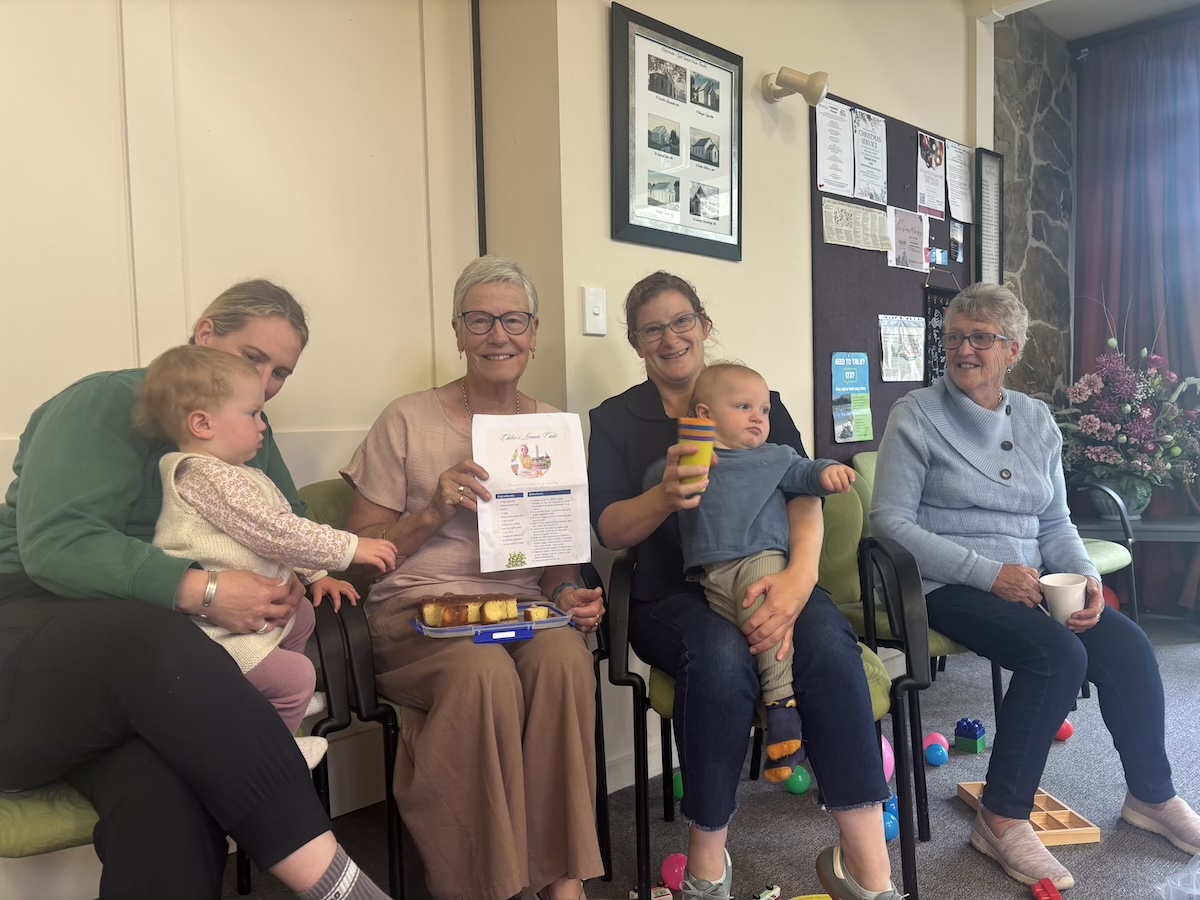
SuperGrans across Central Otago are making an impact in people’s lives, but they could do with some more help.You don’t need to be a nana or a grandad to be involved, anyone of any age is welcome to be part of the SuperGrans SuperSkills group, operated under the umbrella of Central Otago REAP.Founder Ann Conder said people can give as much or as little time as they want to.The programme has grown significantly this year, becoming a key support partner for local agencies and a valued community hub.Based at Alexandra Community House, SuperGrans offers regular gatherings, workshops and in-home mentoring. Its focus is simple: sharing life skills while building stronger relationships between generations.A cornerstone of its work is the Wednesday Coffee Morning, designed to support young families. The sessions offer practical learning such as beginner sewing, knitting, baking ideas and simple recipes. Many parents return each week for companionship, connection and the chance to learn in a relaxed environment.Speakers have covered topics including budgeting, child development, first aid and car-seat safety. Seasonal workshops include everything from Christmas wrapping to microgreen planting.A successful pilot of Grans in Schools is also underway, pairing volunteers with students who benefit from regular contact with older adults. Three volunteers spend time each week in a classroom, supporting learning, listening to students and building positive relationships. Ann said teachers have reported the trial has added valuable one-on-one support, while students have enjoyed receiving guidance and hearing local stories.SuperGrans continue to widen its support for local families through in-home visits referred by Plunket, Dunstan Hospital, Anglican Family Care and Strengthening Families. Volunteers may share a practical skill, help with household tasks or simply support a parent who needs an extra pair of hands.A dedicated knitting group supplies the Maternity Unit with handmade blankets, singlets, booties and beanies, and is currently producing “Teddies for Trauma” for care packs. Toy Swap and Clothing Swap events have also become popular, giving families a cost-free way to refresh items while reducing waste.With continued growth, the programme is exploring new opportunities, including helping at school sports and supporting isolated older residents. Volunteers say the value is mutual: serving families also enriches their own wellbeing.

Rising Heat, Rising Risk: A Local Guide to Protecting Your Home This Summer (sponsored)

15 December 2025, 3:30 PM

Central Otago locals love the long, sun-soaked season here, but rising temperatures are also bringing a higher risk of fast-moving fires across our dry landscape.Hotter summers and longer dry spells are becoming more common across the world, and Central Otago is right at the sharp end of those changes.With more days climbing over 25°C each year, places like the Clutha Valley, Lake Dunstan and the Manuherikia are expected to see some of the biggest increases in heat by the end of the century. That extra warmth might be great for stonefruit, but it also raises the fire danger for homes, lifestyle blocks, and farms. Reduced frost and snowfall in winter also affect water storage and crop resilience, compounding the risks for lifestyle blocks and farms.Dry vegetation, strong nor’westers and limited rainfall all create the perfect conditions for rural fires to take hold – and spread quickly. Understanding how your land, buildings and daily routines may add to that risk is one of the most important steps you can take to protect your home.Three ways to reduce your property’s fire risk this summer1. Know your land and the hazards around youFire and Emergency NZ notes that most rural fires start from preventable causes, so proactive property checks are one of the most reliable ways to protect your home, assets, and livelihood during the peak of summer.Fire risk starts small. Dry grass, leftover firewood piles, fallen branches, rubbish heaps and even a forgotten bottle or piece of broken glass acting like a magnifying glass can all help a fire ignite. Unsecured gas bottles, and flammable liquids are also risks to be aware of. Walk your property regularly and look for anything that could fuel a blaze.Embers can travel more than 2 kilometres, so it’s worth looking beyond just your immediate boundary. Highly flammable trees such as pine, cedar, fir, larch, spruce, eucalyptus, kānuka and mānuka shouldn’t be planted within 10 metres of your home. Keeping vegetation low, clearing debris, and maintaining firebreaks all help slow the spread of fire.2. Have a plan in case a fire breaks outA good plan gives your property a fighting chance.Having multiple hoses ready means you can tackle flames from different angles if a blaze begins. Storing water barrels or tanks around the property adds another layer of protection when pressure drops or access is tight.Make sure your home has a clear, well-maintained safety zone. Irrigated green grass acts as a natural fire break, and Fire and Emergency NZ recommends keeping that area free of anything that could ignite – from stacked firewood to outdoor clutter. If you’re building or renovating, consider fire-resistant materials where you can.If you use heavy machinery, always carry a fire extinguisher. Hot exhaust and dry grass are a dangerous mix, and a small spark can move fast in Central Otago conditions.A quick checklist to keep in mind:Stack firewood well away from the houseClear gutters, decks, and dead vegetationAvoid machinery use near dry grass on hot days3. Understand your cover and protect what mattersFire risk isn’t just a property issue – it’s an insurance one too.Your broker is there to help make sure your sum insured keeps pace with rising building costs so you’re not caught short. They also talk to insurers about the steps you’re already taking to reduce fire risk, which can make a real difference at renewal time.Affordability matters, and brokers work with you to keep your cover sustainable – from negotiating premiums to adjusting excesses or setting up instalment options. The goal is simple: protecting your home, your assets, and the lifestyle you’ve built here without having to compromise on essential cover.However hot this summer gets, taking a few practical steps now helps keep our community safer – and reminds us why Central Otago is a place we’re proud to call home.If you'd like any help, C & R Insurance are here for you. You can call us on 03 448 7139 or check out our website hereSponsored Content: This article has been submitted by a contributing local expert as part of The Central App’s sponsored advisor programme.

1-20 of 1544